Lusaka
Heart of the HunterLusaka is the destination that turns a private debt into an international pursuit. In Zambia, the city is linked to two connected crises: Thobela Mpayipheli is asked to carry a hard drive there within a seventy-two-hour deadline, while Johnny Kleintjes is held at the Republican Hotel and later found dead. The route gives the story its urgency; the hotel concentrates its uncertainty, bringing together intelligence work, coercion, and the unresolved fate of the data.
Destination and Route
Lusaka first enters the plot as a place named over a telephone call. Monica Kleintjes is instructed to meet someone in the foyer of the Republican Hotel in seventy-two hours, and the caller specifies that the hotel is in Lusaka, Zambia. The exchange gives a precise destination and deadline without explaining the full purpose of the meeting. Lusaka is at once concrete enough to direct Monica and distant enough to make the demand alarming.
The deadline becomes a mission when Monica explains that callers from Lusaka have required a disk from her father’s safe. She has been given seventy-two hours to deliver it. She asks Mpayipheli to carry it, and he accepts because he believes he owes Johnny Kleintjes a debt of honour. His decision is not presented as a simple return to his former life: he acknowledges to Miriam Nzululwazi that he can refuse, but insists that honour also means repaying a debt. Lusaka therefore becomes the destination at which his chosen obligation will be tested against his wish to live peacefully with Miriam and Pakamile Nzululwazi.
A conversation with Pakamile gives the journey a different, more ordinary scale. Mpayipheli explains that he expects to fly first to Johannesburg and then continue to Lusaka, with the route passing over either Zimbabwe or Botswana. He describes the destination as a city like Cape Town, making the unfamiliar journey intelligible to a child. The planned air route contrasts with the dangerous overland journey he later undertakes while carrying the disk. Instead of flying directly to the meeting, he must manage fuel, distance, surveillance, and the possibility of crossing borders without the proper papers for his motorcycle.
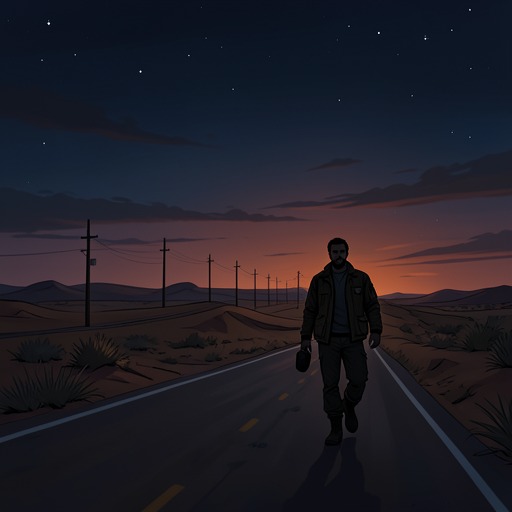
The road journey makes Lusaka a measure of time as much as a point on a map. After Touws River, Mpayipheli calculates that he must refuel at Laingsburg, then cover about two hundred kilometres to Beaufort West and continue north. He estimates another five hundred or five hundred and fifty kilometres to Bloemfontein, with a possible stop there before proceeding. Later, hours lost while he is trapped beneath a bridge matter because he needs to keep moving toward Lusaka. At least two national borders lie ahead, and the Zambezi River presents a further obstacle. The destination is never merely the end of a route: every delay changes the time available to reach it.
The Hard-Drive Operation
The intelligence history behind the delivery makes Lusaka more than a meeting place. Janina Mentz explains that the Central Intelligence Agency had expected a contact through Johnny Kleintjes. After his visit to the consulate, the agency warned him against further direct contact, and his telephone was monitored. A later call arranged a meeting in Cape Town and instructed him to take information to Lusaka. Mentz and her colleagues suspected that Johnny had used his own initiative and that the disk he took contained either nothing or pointless data. The later demand made to Monica is for a different disk, retrieved from her father’s safe, sharpening the distinction between a possible deception and the material now being sought.
That distinction also complicates what the people involved believe they know. At one point, the Presidential Intelligence Unit considers taking the data from Mpayipheli and sending its own team to Lusaka. Mentz weighs the risks of involving Tiger Mazibuko and others across a border, including diplomatic exposure, against keeping the matter under closer control. Her preference is to keep the operation within the intelligence family. Lusaka is thus not simply beyond the reach of South African authorities: it is a destination whose distance makes intervention possible but politically and operationally costly.
The people demanding the disk threaten Monica with consequences for her father if it does not arrive, if agents appear in Lusaka, or if the information proves false. They also claim to know that Johnny has worked with intelligence officials and tried to pass off false data. These threats make the hotel rendezvous part of a larger contest over who controls the hard drive and who can act without exposing the operation. The pressure falls on Monica, who cannot travel herself, and on Mpayipheli, whose movement becomes essential to the plan.
The Republican Hotel
The Republican Hotel gives the Lusaka plot a specific address and a concentrated human cost. A later account describes a team locating Johnny Kleintjes in room 227 after its leader pays the hotel manager five thousand American dollars; the search takes seven minutes. Of the twenty agents available, five accompany the leader to the room, while the others cover entrances, the fire escape, lifts, windows, and balconies or wait in vehicles. The detail of the deployment conveys the operation’s preparation and the expectation that events may turn unpredictable.
When the agents enter room 227, Johnny is dead. Two disks lie on his lap, and a word meaning liar has been cut into his chest. The discovery makes the hotel the point where the promised delivery and the intelligence operation’s earlier deceptions converge, but it does not settle which disk contains what information or who directed the killing. The arrangements in the building suggest careful planning; the contents and purpose of the disks remain contested.
The killing also raises the possibility that information has leaked from inside the intelligence system. A later report says the suspected attackers may have sought material Johnny had secretly kept during the 1994 integration process, rather than the fabricated data associated with the earlier operation. The report links the attack on him to the coercion of Monica in Cape Town and to an attempt to intercept Mpayipheli near the Zambian border. It treats this explanation as a theory, not a proven account, and leaves open how the unknown operatives learned about the operation.
Unresolved Destination
Lusaka remains the intended endpoint of Mpayipheli’s mission, but the evidence does not resolve the hard drive’s final passage into the city. The intelligence report states that the drive is still missing. It connects the missing object to the killing at the Republican Hotel, the pressure placed on Monica, and the reported ambush near the border, while acknowledging uncertainty about the actors and the leak. The location is therefore defined as much by incomplete knowledge as by arrival: it is where the delivery was supposed to become legible, but where the competing accounts leave the central evidence unsettled.
The contrast between the two journeys planned for Lusaka reinforces that uncertainty. Monica’s first instructions point to a hotel foyer and a fixed appointment; Mpayipheli’s route expands into a dangerous, improvised passage across southern Africa. Meanwhile, the intelligence services consider their own ways of controlling the information and the people carrying it. Lusaka gathers these paths without reconciling them. It stands at the far end of Mpayipheli’s obligation to Johnny, and at the center of an operation whose most consequential object remains unaccounted for.